


How Indoor Environments and Chair Design Shape Everyday Comfort
Share
A chair may seem like one of the simplest pieces of furniture in a home, but its comfort depends on much more than its shape. Seat height, back support, surrounding temperature, humidity, and the way a person uses the chair can all influence the experience of sitting. These factors become particularly noticeable in homes where children spend long periods reading, drawing, eating, or playing at a table.
The environment surrounding furniture matters, too. Temperature and humidity can affect both the people using a room and the materials used to make its furniture. Creating a comfortable indoor setting therefore involves looking beyond the chair itself and considering how furniture, movement, and room conditions work together.
Why the Indoor Environment Matters
People often associate indoor comfort with temperature alone, but humidity also plays an important role. Excessively dry air can feel uncomfortable, while excessive moisture can make a room feel warmer and contribute to other indoor-air concerns.
For families setting up children's bedrooms, playrooms, or study areas, maintaining a reasonably consistent indoor environment can make these spaces more comfortable throughout the day. Guidance from Children's Hospital explains how household humidity can affect children's respiratory comfort and offers practical tips for maintaining indoor conditions.
Furniture can also respond to changes in the surrounding environment. Wood naturally absorbs and releases moisture, so significant humidity changes can cause expansion and contraction. Over time, repeated movement can affect joints, finishes, and connections in wooden furniture.
Chair Size Should Match the Person Using It
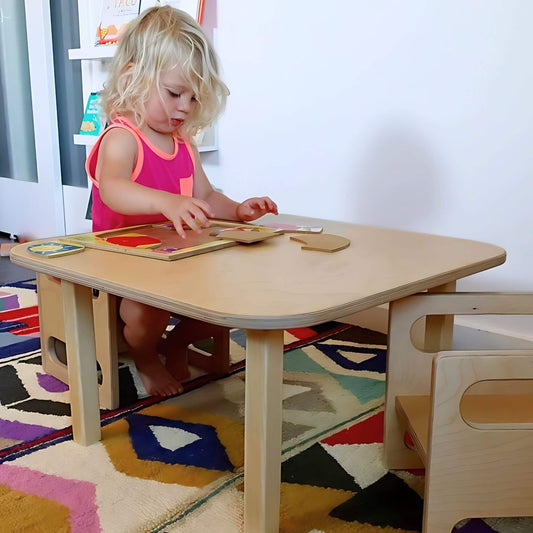
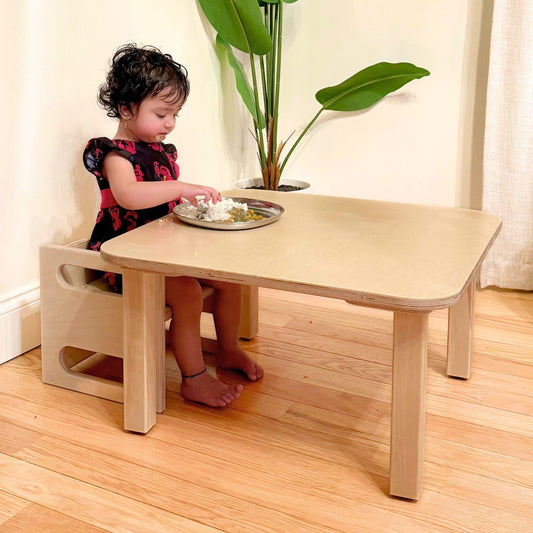
A comfortable chair is not simply a smaller or larger version of another chair. Its proportions should correspond to the person using it. For children, seat height matters most. A chair that is too high may leave the child's feet unsupported, while a seat that is too low can make it difficult to sit comfortably at a table. Ideally, the child's feet should rest on a stable surface, and the seat should allow enough room for natural movement.
The relationship between the chair and table matters as well. A properly sized chair lets a child sit close enough to the work surface without raising their shoulders or leaning too far forward. These considerations become increasingly important as children grow. Furniture that works well for a three-year-old may not provide the same level of support a few years later, which is why adjustable or appropriately sized furniture can be useful in spaces designed for growing children.
Sitting Comfort Is Also About Movement
Children naturally shift their weight, change positions, move their legs, lean forward, and occasionally get up while working or playing. A chair that allows reasonable freedom of movement can accommodate these natural changes rather than forcing the child into one rigid position. This principle applies to older users as well. Chair-based movement can provide a practical way to incorporate physical activity when standing exercises or floor-based movements are inconvenient.
A 21 chair exercises for seniors visual guide demonstrates how a chair can be incorporated into different types of seated movement and exercise. The broader lesson is that a chair does not have to be seen only as a place to sit. Depending on the user and the setting, it can also become part of an active movement routine.
Consider the Materials and Construction
Wooden furniture can offer durability and a natural appearance, but it requires attention to environmental conditions. Moisture changes can cause wood to expand or contract, while prolonged exposure to direct sunlight or heat can affect certain finishes. For children's furniture, construction quality matters most because young users may rock, shift, climb onto, or otherwise interact with furniture in ways adults do not.
Parents should periodically check chairs for loose screws, damaged joints, splintered surfaces, unstable legs, or other visible changes. A quick inspection can identify problems before they become more significant.
Furniture Placement Can Affect Comfort
A chair placed directly beside a heating vent may be exposed to continuous warm, dry airflow. One positioned near a sunny window may become considerably warmer than the rest of the room. Exterior walls can also create different temperature conditions, particularly in poorly insulated spaces.
For children's study areas and playrooms, position furniture away from strong direct heat and intense sunlight when possible. This can help create a more consistent environment while also reducing unnecessary exposure that may affect furniture materials.
Room layout also matters for movement. Children benefit from having enough space to pull out a chair, sit down, stand up, and move around the furniture without constantly bumping into surrounding objects.
Create Flexible Spaces as Children Grow
A child's relationship with furniture changes as they grow. A chair that initially serves as a place for snacks may later become part of a reading corner, art station, homework area, or creative workspace.
Instead of designing a room around a single activity, parents can create flexible spaces that support different types of movement and use. Lightweight furniture makes rearranging easier, while appropriately sized tables and chairs let children transition between activities without constantly adapting to oversized furniture.
A Comfortable Chair Is Part of a Larger Environment
Chair comfort cannot be separated completely from the room in which the chair is used. A well-designed seat may still feel uncomfortable if the surrounding environment is excessively hot, cold, humid, or dry. Likewise, a comfortable room does not compensate for poorly proportioned or unstable furniture.
The most useful approach is to consider several factors together: appropriate furniture dimensions, stable construction, freedom of movement, sensible placement, and reasonably consistent indoor conditions.
For growing children, these details can make everyday activities such as reading, drawing, eating, and playing more comfortable. And because the basic principles of supportive seating and movement remain relevant throughout life, thoughtful furniture choices can contribute to healthier and more adaptable spaces for everyone in the household.





 Off
Off
