


The Family Dining Set That Makes a Small Home Feel Bigger
Share
The dining table is where homework, dinner and weekend crafts all happen, so it gets more daily use than almost any other piece of furniture. When you are comparing dining table sets for a modern home, the details that matter most are size, surface and safety, not just how good the set looks in a showroom. This guide covers how to measure properly, which tabletop suits young children, and how to choose seating that holds up.
Measure the Space Before You Buy
Most dining set regrets come from poor measuring. Allow at least 36 inches (about 3 feet) between the table edge and the nearest wall or furniture. That is the minimum space needed to pull a chair out and sit down comfortably. If people will walk behind seated diners, aim for 44 to 48 inches.
A simple way to check is to mark the table’s outline on the floor with painter’s tape, then add the chairs pulled out. Walk around the shape, carry a plate across it and see how it feels. Plan roughly 24 inches of table width per person, so a table for four is comfortable.
Also measure the front door, hallways and any stairs. A table that cannot get into the room is a costly mistake.
Choose a Tabletop That Handles Family Life
Sealed wood and laminate are two popular options, and they behave quite differently.
Sealed Wood
- Pros: durable, warm in appearance, and can be sanded and refinished if it gets damaged.
- Cons: shows dents and scratches, can develop water rings if the seal wears down, and needs occasional resealing. It is usually the more expensive option.
Laminate
- Pros: affordable, resists stains and moisture, and wipes clean in seconds.
- Cons: edges can chip, it cannot be refinished, and hot pans can damage it, so trivets are a must.
For very young children, laminate is often the easier choice for everyday spills, while sealed wood suits families who prefer a surface that can be repaired later. Whichever you pick, a matte or lightly textured finish hides fingerprints and crumbs better than a high-gloss one. Clean with a damp cloth and mild soap, since harsh abrasive cleaners can dull the finish.
Design Features That Protect Young Children
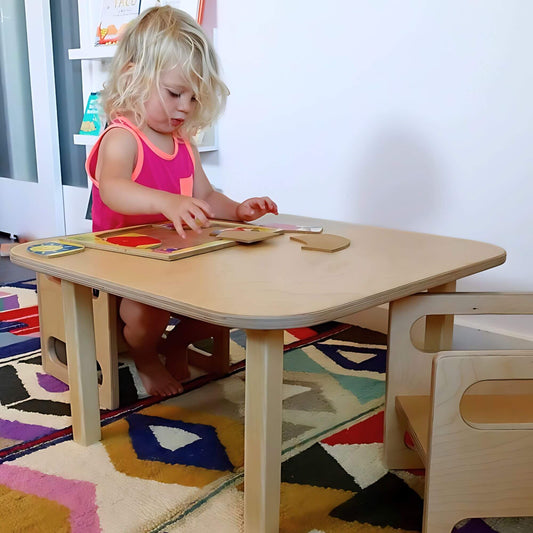
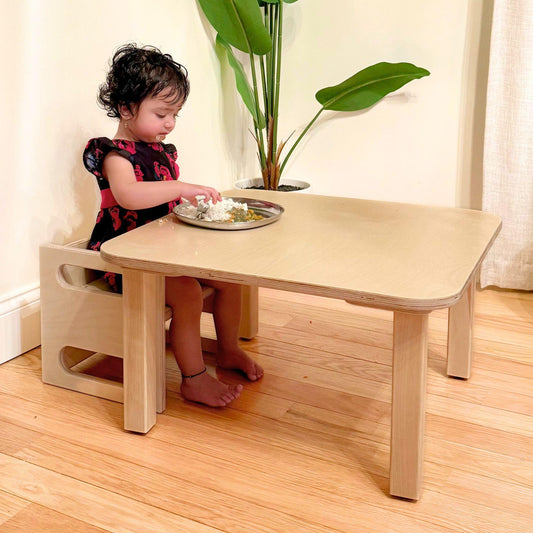
For parents of toddlers and preschoolers, the shape of the table matters as much as the material.
- Choose rounded or bevelled corners, or a round or oval table, to reduce injuries from bumps.
- Check the table is stable and cannot be tipped when a child leans or pulls on the edge.
- Skip long tablecloths while children are small, since they can pull them and everything on top down. Placemats are safer.
- Avoid glass tops in homes with young children, as they show every handprint and can break.
Chairs Built for Climbing, Tipping and Sticky Hands
Chairs take more punishment than the table. Look for solid frames with screwed or doweled joints and corner blocks, since cheap flat-pack frames can loosen within months. Wipe-clean backs and seats make cleanup quick after meals.
If you’re using a booster seat, make sure it’s compatible with your dining chair and can be securely attached according to the manufacturer’s instructions. Table-mounted high chairs have separate requirements, so check that your table is suitable before using one. For children who are too small for the table, a footrest helps them sit comfortably through a meal. Removable, washable seat cushion covers are worth having because washing is cheaper than replacing.
A bench on one side is another practical option for family homes. It seats several people and tucks fully under the table when the floor needs to be clear for play. Benches are generally better suited to older children who can sit independently and safely, while younger children may benefit from more supportive seating.
Make the Set Feel Lighter in the Room
In a smaller home, visual weight matters. Tables with slim, visible legs let light pass underneath and keep the floor looking open. A pedestal base can also free up legroom, although it should be wide enough to stay stable. Lighter finishes make a room feel more spacious, while darker tones add weight, so pick based on how much space you have.
A rug under the table helps define the dining area. Choose a low-pile or washable one that extends at least 24 inches past the table edge on all sides, so the chair legs stay on the rug when pulled out. Low-pile rugs are far easier to clean than thick ones when food lands on them.
Plan for Homework, Crafts and Meals
Many family tables work as a desk as well as a dining space. For families who enjoy game nights, a multipurpose table can make the dining area even more versatile. Some designs, such as a board game kitchen table, are built to accommodate both everyday meals and tabletop games, allowing one piece of furniture to serve multiple purposes. This can be especially useful in smaller homes where there isn't room for a separate gaming table. A few habits keep the surface in good shape:
- Use a placemat or craft mat for markers, paint and glue.
- Keep a basket nearby for supplies so the table can be cleared quickly before dinner.
- Wipe spills straight away, especially on wood, to protect the seal.
Final Thoughts
The best dining set for a family fits the room with proper clearance, has a surface that is easy to clean and chairs that cope with daily use by young children. Measure carefully, compare surfaces honestly and choose safe shapes. A well-chosen set will keep working through homework, dinners and everything in between.





 Off
