


Creative Ways to Support and Engage Children with Special Needs at Home
Share
Parents and caregivers of young children with special needs often carry the same quiet stress: learning at home can feel like a daily tug-of-war between what a child needs and what a busy household can realistically provide. Many families run into challenges like short attention spans, sensory overload, big emotions, uneven skill development, or difficulty with transitions, especially when typical school-style lessons fall flat. That’s where creative learning strategies and engaging educational activities can help. Supporting neurodiverse children works best when learning feels safe, flexible, and worth returning to. Small shifts in approach can make progress feel possible.
Quick Summary: At-Home Support Ideas
- Use tactile learning tools to make concepts hands-on and easier to understand.
- Use visual support to clarify routines, choices, and expectations throughout the day.
- Use special-needs-friendly apps to reinforce skills with engaging, guided practice.
- Use simple task-splitting to break bigger activities into manageable, confidence-building steps.
- Use movement-based learning to boost focus and participation through active, body-friendly practice.
Try These Activities Today: Touch, See, Move, and Play
Pick one activity from each “bucket”: touch, see, move, or play, and keep it short. A few minutes of the right-fit practice often goes farther than a long lesson that turns into a struggle.
- Start with puzzles you can finish fast: Choose a puzzle your child can complete in 3–5 minutes (big knobs, chunky pieces, or just 4–8 pieces). Do one round with you pointing and labeling (“edge piece,” “match the picture”), then immediately do a second round where your child leads. The quick win builds confidence and attention, and you can store puzzles on a low, open shelf so your child can choose them independently.
- Build with blocks for “hands first” learning: Use building blocks to practice simple concepts: “tall/short,” counting 1–5, or copying a two-block pattern like red-blue. Keep the goal tiny, build a tower with 6 blocks, then stop, so your child doesn’t get stuck in perfectionism. Play like this supports everyday skills because building with blocks helps strengthen hand-eye coordination and dexterity.
- Make a sensory bin that has a purpose: Fill a small bin with one base material (dry rice, kinetic sand, water beads in a sealed bag) and add 6–10 scoopable items (cups, spoons, toy animals, letter shapes). Give a simple “mission” like “find 5 animals” or “scoop to the line,” and set a timer for 5–10 minutes. Sensory play is especially helpful when attention is wiggly, 34 percent better engagement can show up when kids learn with more than one sense.
- Use colorful charts and flashcards as “one-step helpers”: Post a mini visual on the wall at your child’s eye level, just 3 pictures for “first/then/done” or a 4-step bedtime routine. With flashcards, don’t drill a whole stack; pick 3 cards, play “find it,” and hide them around the room. Laminating or using wipe-clean sleeves keeps visuals durable and easy to reuse.
- Try an interactive educational app with a clear boundary: Choose one skill (letters, matching, early math) and set a predictable routine: 10 minutes after snack, then the device goes to a charging spot out of reach. Sit nearby and narrate what you see (“You matched the triangle!”) so it stays social, not isolating. If your child gets stuck, switch from “keep trying” to “show me one, then you do one.”
- Chunk any task into tiny “finish lines”: Turn “clean up your room” into 3–5 mini tasks on a simple checklist: “books in bin,” “stuffies on bed,” “clothes in hamper.” Use a small basket as a “parking spot” for items you’re unsure about, so momentum doesn’t die. This approach matches the same big idea as guided play, structure from you, ownership from your child.
- Add movement with dance and role-play: Put on one song and play “freeze and pose” to practice listening and self-control, or act out daily routines with toys (doctor visit, grocery store, brushing teeth). Role-play is also a gentle way to practice language: you say the first line, your child repeats or chooses a picture card response. Keep props in a lidded bin so it’s easy to set up and tidy quickly.
Common Questions Parents Ask at Home
Q: How can I use sensory activities to keep my child with special needs engaged without feeling overwhelmed?
A: Keep sensory play “small and contained”: one bin, one material, one simple goal, and a short timer. Start with 5 minutes and stop while it’s still going well, so you both feel successful. If mess is a stressor, use a tray, towel, or sealed bags your child can squish and sort.
Q: What are some simple creative techniques to break down tasks for children who struggle with focus?
A: Turn the task into tiny steps your child can finish quickly, then offer a clear “done” spot like a basket or bin. Use a visual strip with 2 to 4 pictures, and give one direction at a time. Save paperwork by keeping checklists, visuals, and notes together, then merge pages into one PDF if you want.
Q: How can physical activities like dance or role-playing improve my child's learning experience?
A: Movement can help kids stay regulated, which makes listening and participation easier. Try one-song games like “freeze” to practice self-control, or act out routines with toys to build language and sequencing. Keep it low-pressure: you model first, then your child takes one turn.
Q: What are effective ways to celebrate small milestones to boost my child's confidence and motivation?
A: Praise the specific effort you want repeated, such as “You kept trying” or “You asked for help.” Track tiny wins on a simple calendar or sticker chart so progress feels visible. Many families also find creative expression through art supports confidence, so even one finished doodle can count as a win.
Q: How can the right furniture and environment support my child’s independence and learning at home?
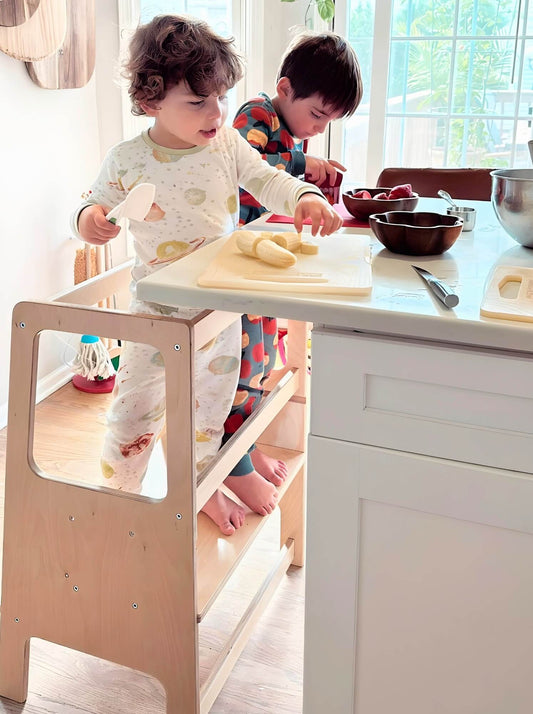
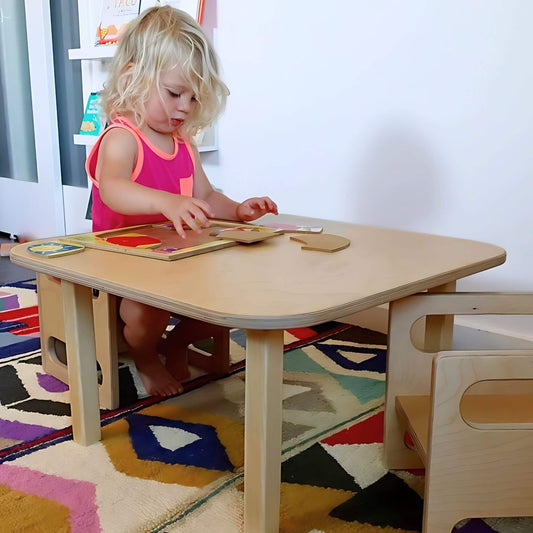
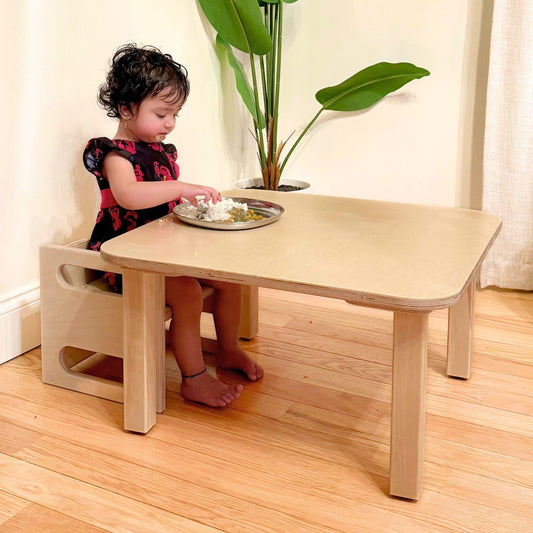
A: A thoughtfully prepared space can reduce daily friction: stable surfaces for building, rounded edges for safety, and easy-clean finishes for sensory messes. Choose pieces that match your home but also fit your child’s body, like a chair that supports feet-on-floor sitting and shelves they can reach. When the environment is thoughtfully prepared for your child, they can start activities with less prompting and stay engaged longer.
Habits That Keep Learning Playful and Consistent
Habits work because they remove daily guesswork. With a steady play setup and a few predictable rhythms, your child gets more practice and you get a home that still feels calm, durable, and stylish.
Two-Minute Setup Reset
- What it is: Return favorite materials to one low shelf and wipe the play surface.
- How often: Daily
- Why it helps: A ready, well-prepared space reduces starting friction and supports independence.
Short-and-Sweet Learning Window
- What it is: Do one focused task, then stop with a clear “done” routine.
- How often: Daily
- Why it helps: Ending on success builds confidence and cooperation.
Read-Aloud Anchor
- What it is: Build a cozy reading corner and keep 3 books within reach for reading to children.
- How often: Daily
- Why it helps: Predictable language time supports connection and attention.
Milestone Snapshot
- What it is: Write one win on a note card and place it in a “wins” box.
- How often: Per milestone
- Why it helps: Visible progress keeps motivation up during slower weeks.
Weekly Play Rotation
- What it is: Swap in two activities and store the rest in labeled bins.
- How often: Weekly
- Why it helps: Fewer choices lower overwhelm while keeping interest high.
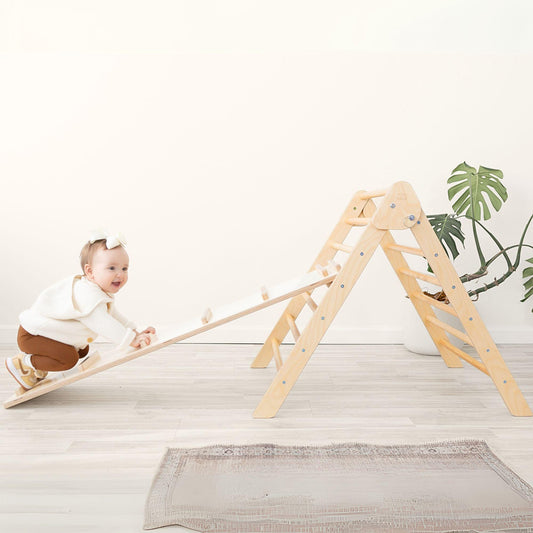
Many families also find that the physical setup of their home makes a big difference in how easily children engage in activities. When materials are stored on low shelves, work surfaces are stable, and furniture is sized for small bodies, children can begin tasks more independently and return to them more often. A thoughtfully prepared space doesn’t need to be complicated or expensive, but when the environment supports your child’s curiosity and comfort, learning tends to happen more naturally throughout the day.
Start Small to Make Learning Supportive and Sustainable at Home
Supporting a child with special needs at home can feel like balancing learning goals with real-life energy, attention, and big feelings. A gentle, creative approach, built on short routines, playful practice, and flexible expectations, keeps progress possible without constant pressure. Over time, these small choices help parents notice what truly supports their child, and the parent-child connection through learning grows stronger alongside new skills. Connection comes first, and learning follows. Choose one new idea to try this week and keep it short enough to repeat. When learning feels safe and doable, it supports confidence, resilience, and steadier days for the whole family.
About the author:
Cassidy Gibson-Cooper co-founded Parenting Central to share the "ins and outs" of life with her children, Sam and Autumn. A 21st-century parent herself, Cassidy created the platform as an enjoyable way to offer practical tidbits and diverse guest perspectives to families navigating the modern parenting journey.





 Off
Off
