


Designing a Home That Supports Independence at Every Age
Share
A family home rarely stays the same for long. The room that once held a baby mat becomes a toddler’s play area, then a reading corner, then a place for homework, hobbies, and everyday routines. The best spaces make those changes feel natural. They give children room to try, help, reach, move, and make choices without turning every moment into a safety worry or an adult-led task.
Independence starts with the small details families use every day: where shoes go, how books are displayed, whether a child can sit comfortably, and how easily toys or art supplies can be cleaned up. When a home is arranged with children in mind, independence becomes part of daily life instead of something parents have to keep prompting.
Start With the Spaces Children Use Most
Independence is easier to build when the busiest parts of the home reflect how your family actually lives. A child does not need access to everything. They need access to the right things, in the right places.
Start with the areas your child uses most: the bedroom, playroom, kitchen, entryway, or a small learning corner. Look at each space from your child's perspective. Can they reach their books? Can they choose one activity without pulling out ten bins? Can they sit with their feet supported? Can they put something away without asking for help?
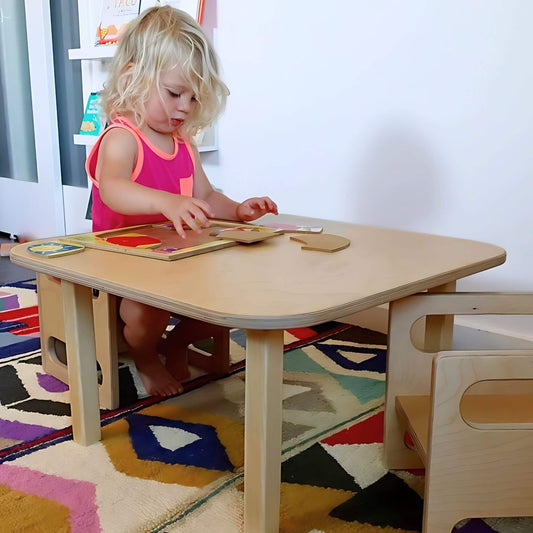
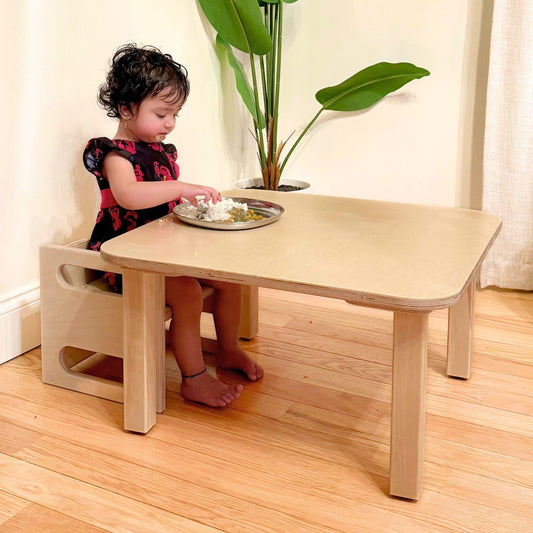
Small adjustments can change the feel of a room. A low shelf with a few visible toys makes it easier to choose. A child-sized table gives drawing, puzzles, and snack time a clear place to happen. Hooks at the right height make jackets and bags part of a child’s routine rather than another task waiting for a parent.
The goal is not to make the whole home revolve around children. It is to create a few reliable spots where they can practice ordinary tasks with more confidence.
Make Independence Easy to Practice
Children grow more confident when independence shows up in small, repeatable moments. A low shelf, a steady chair, or a clear place for art supplies can turn “Can you get that for me?” into “I know where that goes.”
The setup matters because children practice what their environment allows. In a Montessori-inspired space, books, toys, and learning materials are placed where children can see them, reach them, and return them without the room becoming chaotic. That kind of access gives children a little more ownership over their day.
Keep choices limited and useful. A few books facing forward are easier to choose from than a crowded shelf. Two or three activity options feel more inviting than a pile of mixed toys. A small table with the right chair helps a child settle into drawing, sorting, snacking, or building without waiting for an adult to rearrange the room.
Independence grows through practice, not pressure. When a home makes simple tasks easier to repeat, children learn that they can take part in family life with more confidence and less frustration.
Let Furniture and Layout Reduce Daily Friction
A home that supports independence should make the easy things feel easy. When children can move through a room without constant correction, the whole day often feels calmer.
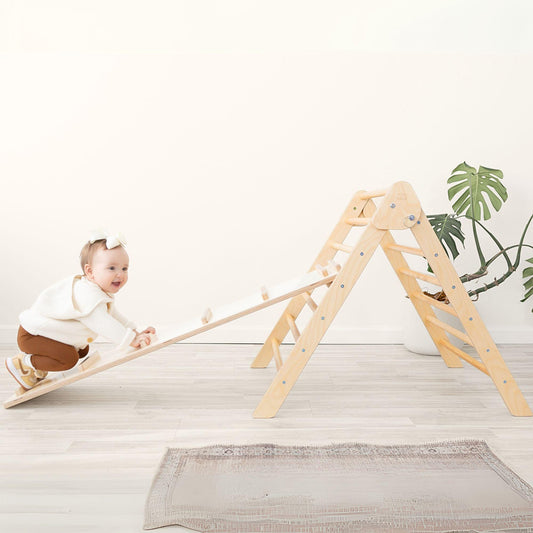
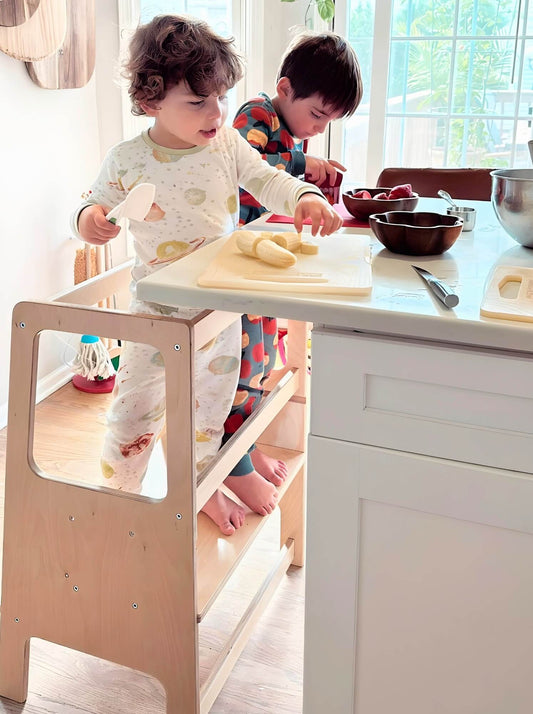
Furniture plays a big role. A sturdy table at the right height helps children sit, draw, build, and eat without sliding around or climbing unsafely. Open shelving gives activities a clear home. A learning tower can make kitchen help feel more secure than balancing on a stool. Even a small bench near the entryway can make shoe and coat routines easier for children to handle with less help.
Layout matters just as much as the furniture itself. Leave clear paths through play areas. Keep favorite items within reach without dragging a chair over. Store messy supplies in a way that still feels available, such as a small bin for crayons or a tray for simple crafts.
The best family spaces do not remove every challenge. They remove the unnecessary obstacles, so children can spend more energy practicing real skills.
Keep Safety Visible Without Making the Home Feel Restricted
Safety works best when it feels built into the room instead of layered on top of it. Children need room to climb, reach, carry, build, and test their abilities, but the space should make the safer option feel natural.
Start with clear walking paths, steady furniture, and storage that does not invite unsafe climbing. Favorite toys, books, and art materials should be reachable without a child needing to drag a chair over or climb a shelf. Cords should be tucked away, heavy items should be placed low, and families should anchor heavy furniture and appliances in spaces where children play, rest, or explore.
The point is not to remove every challenge from the home. Children need chances to stretch their abilities, make choices, and learn how their bodies move through a space. A room that says “you can try” is more useful than one that constantly says “be careful.”
The best safety choices are often quiet ones. They do not interrupt play or make the home feel clinical. They simply help children move through the day with fewer hazards and more confidence.
When Independence Depends on the Right Care Environment
As families think about independence for children, they often become more aware of what independence requires at every stage of life: safe movement, accessible spaces, steady routines, and support that matches a person's needs.
Those same principles can matter when helping aging parents or relatives. Families often look for signs that a loved one is comfortable, mobile, receiving consistent care, and able to maintain dignity and independence in daily life.
When concerns begin to form a pattern rather than an isolated incident, resources such as Arkansas long-term care neglect information can help families better understand potential warning signs and next steps.
The most useful habit is to look for patterns instead of single imperfect moments. Missed meals, repeated discomfort, unexplained withdrawal, or a room that consistently feels uncared for can raise bigger questions when they happen again and again. The details may look different from one situation to another, but the family instinct is often the same: people want loved ones to be safe, heard, and treated with dignity.
Build Flexibility Into the Family Home
A home that supports independence should be easy to adjust. Children grow quickly, routines shift, and the furniture or layout that worked six months ago may start creating small frustrations.
Watch for signs that a space no longer fits the child. A chair may be too low, a shelf may feel crowded, or a play area may no longer match the way your child learns and moves. Sometimes the fix is simple: rotate materials, move a table closer to natural light, clear a path through the room, or give daily items a more obvious home.
Flexibility also helps parents avoid creating a space around a single short stage. A good family setup can move from pretend play to reading, from crafts to homework, from quiet time to shared projects. The more adaptable the room feels, the easier it is for children to take ownership without needing a full reset every time they grow.
The best homes are not frozen around one age. They keep making room for the people who live in them.
A Home That Adjusts With the People in It
Independence looks different as a family grows. For a toddler, it may mean reaching a favorite book without help. For an older child, it may mean having a calm place to study, create, or reset after a long day. For parents and caregivers, it often means building a home that supports daily life without constant correction.
The most thoughtful family spaces are practical, flexible, and easy to understand. They help children participate, give adults fewer small problems to solve, and leave room for care to change over time. A home does not need to be perfect to support independence well. It needs to keep adjusting with the people who live, learn, rest, and grow there.





 Off
Off
