


How Everyday Home Spaces Can Inspire Bigger Pretend Play
Share
Children have a way of turning ordinary places into entire worlds. A living room rug becomes the ocean. A hallway becomes a runway. A low table becomes a shop counter. A quiet corner becomes the beginning of an adventure.
A good play space does not have to be big, expensive, or perfectly styled. What children need most is room to move, materials they can reach, and the freedom to decide what the space becomes. With a few thoughtful choices, everyday rooms can support building, climbing, reading, storytelling, acting, and quiet moments of reset without needing a separate playroom for every kind of activity.
Start With Spaces Your Child Already Uses
Pretend play often starts in the places where children already feel at ease. The edge of the living room, a bedroom corner, a hallway landing, or a spot near the kitchen can become more inviting than a separate playroom because it is already part of daily family life.
Notice where your child naturally gathers toys, books, blocks, or blankets. That spot may already be showing you where a creative play area belongs. A child who brings blocks to the rug may need more open floor space. A child who carries books to the couch may enjoy a small reading-and-story corner nearby. A child who builds forts under tables may be looking for a cozy place to transform.
The goal is not to redesign the whole house. Small changes can make familiar spaces easier for children to use on their own. A basket of simple props near the sofa, a low shelf in a bedroom, or a child-sized table beside a sunny window can make everyday rooms feel ready for play without taking over the home.
Let Furniture Become Part of the Story
Children often see possibilities in furniture that adults miss. A low table can become a ticket booth, a kitchen counter, a cave entrance, or a place to draw maps. A bench can turn into a train seat. A shelf can become a market stand. Floor cushions can mark out a campsite, a reading spot, or a boat drifting down a pretend river.
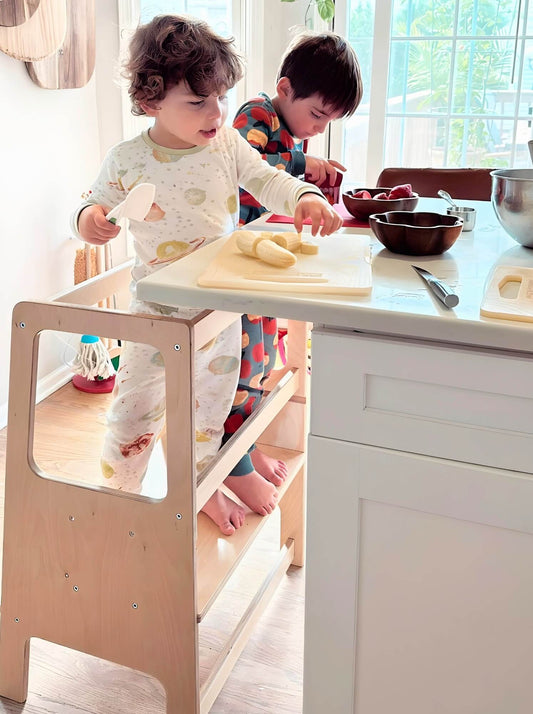
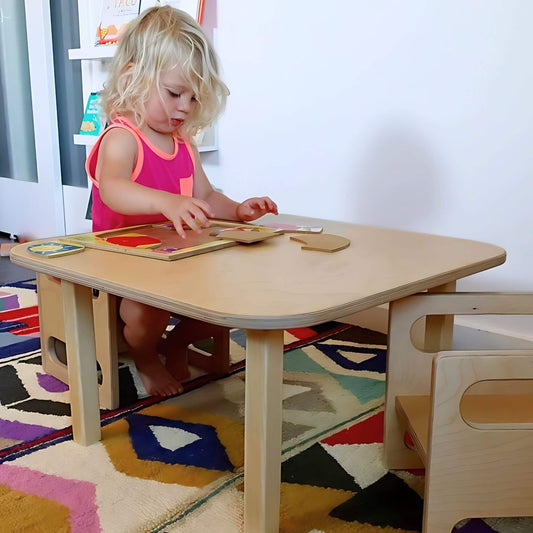
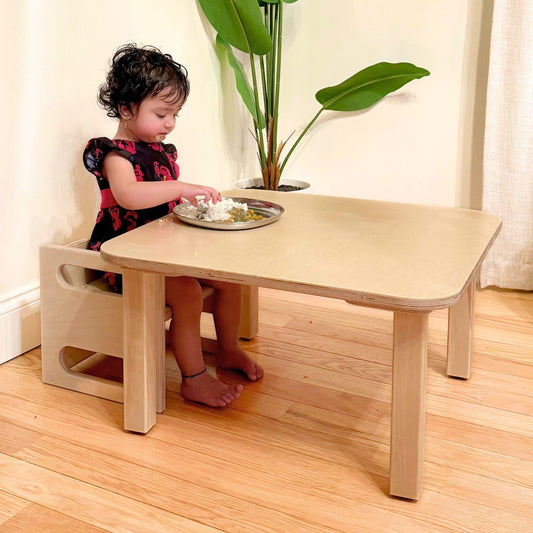
Flexible, child-sized furniture supports imagination because it doesn't dictate how it should be used. A low table might become a bakery one day, a train station the next, and a spaceship after that. When children can move safely around a piece, reach materials on their own, and use the same setup in different ways, the room begins to support their ideas instead of limiting them. The more open-ended the furniture, the more room children have to imagine.
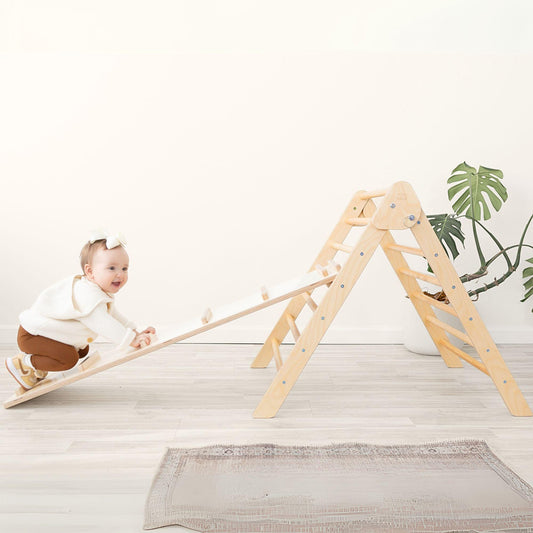
Sturdy pieces, soft landing areas, and clear pathways also help pretend play move naturally into physical play. A child might crawl through a tunnel, balance across a bridge, climb to a lookout point, then return to the table to draw what happens next. When a room supports that rhythm, play feels active, connected, and self-directed.
Keep Open-Ended Materials Within Reach
The materials around a play space can make pretend play easier to begin. A basket of blocks can become food, treasure, buildings, or tools. Scarves can turn into costumes, picnic blankets, rivers, or sails. Paper and crayons can become signs, menus, maps, tickets, or letters for a pretend post office.
This is why open-ended play works so well in everyday home spaces. Children are not limited to one script or one correct way to use an object. They can come back to the same materials again and again with a completely new idea.
Keep those materials visible, simple, and easy to put away. Low baskets, trays, and shelves help children independently choose, use, and return materials without needing an adult to pull everything out. A small group of flexible items often leads to richer play than a crowded shelf full of toys that only do one thing.
Create Small Story Starters for Pretend-Play Worlds
A pretend-play world does not need many props to feel real. A blanket can become a sail, a basket of blocks can become treasure, and a row of chairs can become the deck of a ship. Children often build their best stories when the setup leaves space for their own decisions.
Small story starters can help without taking over the game. A child planning a sea adventure might draw a treasure map, assign roles to the crew, and let a pirate name generator make character names part of the fun before the story begins.
The best prompts are the ones children can change. A few blank cards can become shop signs, theater tickets, animal rescue notes, or secret messages. A stack of paper near a low table can support whatever world your child is building that day while still letting them stay in charge of the story.
Give Movement a Role in Make-Believe
Pretend play becomes more engaging when children can move through the story with their whole bodies. A cushion path can become stepping stones across a river. A sturdy stool can become a lookout point. A soft mat can become the place where the rescue team lands, gathers supplies, and plans the next part of the adventure.
Movement gives children a way to practice confidence, coordination, and problem-solving while staying inside the world they have created. When children pick roles, create a shared world, and solve small disagreements along the way, pretend play can support social and emotional skills in a way that feels natural and joyful.
When a home play area leaves room for crawling, balancing, carrying, building, and resting, children can move between action and imagination without stopping the game. The story becomes something they can build, act out, change, and return to in their own way.
Make Resetting the Space Simple
A play space works best when children can help bring it back to order. Clear baskets, low shelves, and simple categories make cleanup feel like part of the daily rhythm instead of a chore that only adults can manage.
Keep the system easy to understand. Blocks can go back in one basket, scarves in another, and drawing materials in a small tray or caddy. When every item has a visible place, children are more likely to return materials on their own and come back to the space later with a new idea.
Resetting does not have to erase the play. A half-built fort, a pretend shop sign, or a stack of tickets can stay out when the story is still alive. The goal is to keep shared family spaces usable while giving children room to return to the worlds they are creating.
Let the Room Tell a New Story Each Day
The best part of everyday home spaces is how easily they can change. The same rug that held a pretend ocean yesterday can become a forest path today. The same low table can shift from a bakery counter to a train station to a quiet place where a child draws the next scene.
When children have flexible furniture, open-ended materials, and the freedom to decide what a space can become, their play has room to grow. A home doesn't need to look like a playroom in every corner. A few thoughtfully designed spaces, combined with furniture and materials children can access independently, are often all it takes to inspire hours of creative play.





 Off
Off
