


How Parents Can Help Their Children Build Real Self-Confidence
Share
Introduction
Every parent wants their child to feel capable, valued, and strong — yet genuine self-confidence grows gradually through everyday experiences. It’s built, like muscle, through experiences that teach resilience, self-awareness, and trust in one’s own judgment. The way parents respond to failure, celebrate effort, and create space for autonomy shapes how children learn to see themselves.
TL;DR
- Confidence grows from experience, not praise alone.
- Encourage problem-solving and persistence.
- Let kids make age-appropriate decisions.
- Model calm self-belief in your own challenges.
-
Praise effort, not perfection.
1. Let Them Try, Fail, and Try Again
Children gain confidence by doing, not by being told they’re great. When they take on tasks—tying shoes, baking, climbing trees—they’re also learning capability. “Don’t rescue them too soon,” says parenting expert Dr. Laura Markham. Even small independent acts — like ordering their own meal — teach self-trust.
Checklist: When to Step Back vs. Step In
- Is it safe? → Step back.
- Are they frustrated but still trying? → Encourage.
-
Are they overwhelmed or unsafe? → Step in calmly.
2. Build Confidence Through Contribution
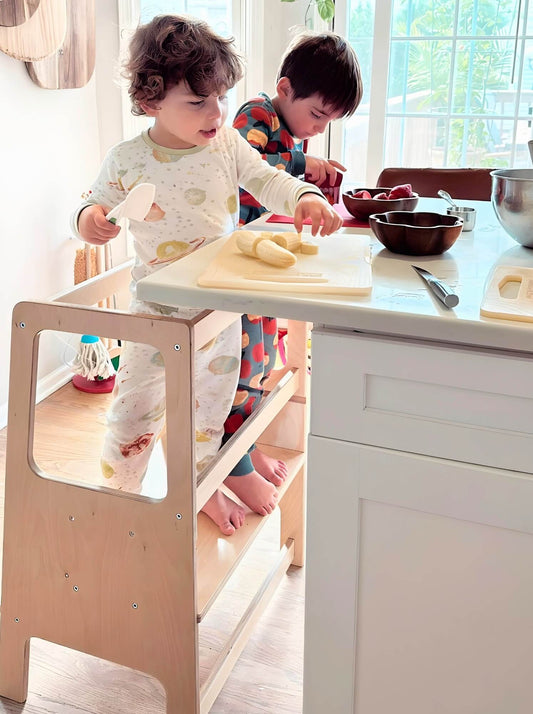
When kids help — setting the table, feeding pets, or helping a sibling — they see themselves as capable members of the family. Contribution builds belonging. Try introducing “confidence chores”: small, achievable tasks that scale with age. Resources like ParentLab and Positive Parenting Solutions offer age-based task guides. Every child develops at their own pace, but here are some age-aligned ideas you can pull from if they feel like a good fit.
Confidence Builders by Age
|
Age Range |
Parent Role |
Key Confidence Activities |
|
3–5 years |
Encourage curiosity |
Dress themselves, mix ingredients, choose outfits |
|
6–9 years |
Guide exploration |
Manage allowance, help cook dinner |
|
10–13 years |
Allow autonomy |
Plan family outings, learn basic budgeting |
|
14–17 years |
Empower decisions |
Volunteer work, part-time job, manage schedules |
3. Use Language That Builds Inner Strength
The way we talk to our kids often becomes the way they talk to themselves, so small shifts in wording can make a big difference over time. Replace “You’re the best!” with “You worked hard on that!” or “You figured it out!” For more on supportive communication, explore Big Life Journal.
Try This Phrase Swap List:
- “You’re so smart.” → “You kept going even when it was hard.”
-
“Don’t worry, I’ll fix it.” → “Let’s figure out what you can try next.”
FAQ — Parents Often Ask
Q: My child gives up easily. What should I try?
A: Normalize frustration. Say, “I can see this is hard, but you’re learning.” Then model persistence by working on something yourself.
Q: How do I balance encouragement with realism?
A: Focus on effort and growth. Praise specific actions, not identity (“You really focused on the details,” instead of “You’re perfect”).
Q: What if my child compares themselves to others?
A: Encourage them to measure progress against their past self, not peers. Journals or habit trackers from Child Mind Institute can help.
Empowering Teens Through Real-World Confidence
As children grow, confidence thrives when tied to real responsibility. One powerful way to cultivate this is through entrepreneurship — encouraging your teen to start a small venture, manage a project, or sell a creative service teaches problem-solving, decision-making, and accountability.
For structured support, platforms like zenbusiness.com offer an all-in-one business solution — helping teens (and adults) build websites, register a business, and design a logo while learning the fundamentals of ownership.
4. Bonus Section: Confidence Through Creative Platforms
Many kids find a sense of confidence when they get to express themselves, whether that’s through art, building, designing, or other hands-on projects. Tools like Canva for Education, Skillshare, or LEGO Education help kids explore, design, and share their ideas publicly. These experiences reinforce that their contributions matter.
5. Quick “Parent Confidence Calibration” Checklist
Here are a few questions that can help guide us in those everyday moments:
- Am I giving my child space to try?
- Am I praising the process, not perfection?
- Am I letting them solve the problem their way?
- Have I modeled calm confidence today?
-
Did I celebrate an effort — not just an outcome?
Conclusion
Raising confident children isn’t about shielding them from struggle — it’s about teaching them that struggle is safe. Confidence is courage in motion: built every time a child tries, fails, and learns they can rise again.
Simple at-home kids birthday ideas that let your child help plan the fun are another way to show them they are capable and trusted.






 Off
Off
