


How to Support Your Child's Learning Journey Beyond the Classroom
Share
Busy parents juggling work, dinner, laundry, and bedtime routines know how quickly supporting learning at home can start to feel overwhelming. The core tension is real: school expectations keep coming, but learning outside the classroom often lands on already-full plates, and parent involvement in education can start to feel like nagging instead of nurturing. Add in different attention spans, learning styles, and confidence dips, and common child education challenges can make even simple practice feel heavy. With a calmer approach and a few flexible alternative learning methods, learning at home can feel doable again.
Build 5-Minute Mini-Lessons With Custom Videos at Home
When you want learning support that feels calm (not combative), a quick visual can do the heavy lifting. Creating short, customized educational videos at home lets you reinforce a tricky concept in a way that matches your child’s pace and learning style, fast, friendly, and easy to replay whenever they need it. Think of these as five-minute mini-lessons that “show” instead of just “tell,” helping ideas click without turning practice time into a tug-of-war. Simple tools can also help you create quick visual explanations tailored to your child’s interests and pace. Even a short custom video or slideshow can make tricky concepts feel more approachable and easier to revisit later.
8 Hands-On Ways to Make Learning Stick This Week
When learning leaves the classroom, it sticks best when it’s connected to your child’s real life, what they love, what they wonder about, and what they can do with their hands. Pick a few of these for the week and keep them short, light, and repeatable. The goal isn’t to recreate school at home. It’s to make learning feel natural, playful, and connected to everyday life.
- Do a “quiet detective” interest scan: Spend two days simply noticing what your child chooses during free time, books they pull down, games they repeat, topics they bring up at dinner. The clue is often what they return to even when nobody’s directing them. Jot three patterns you see (animals, building, drawing, space, cooking), then aim your next activities at those themes.
- Turn your 5-minute custom video into a scavenger hunt: After you show a quick, tailored clip at home, send them to find proof of the idea in the real world. If the video covered fractions, hunt for “halves and quarters” in measuring cups and pizza slices; if it was about habitats, look for micro-habitats under a log. The goal is one “aha” moment, not a long lesson.
- Make it a dinner-table story, not a quiz: Choose one gentle prompt per night: “What was tricky today?” “Show me one thing you figured out.” “If you could teach me one part, what would it be?” When kids explain in their own words, you learn what actually landed, and they practice organizing thoughts without the pressure of being graded.
- Use educational games for kids with a ‘skill target’ and a timer: Pick one skill (mental math, spelling patterns, logic, geography) and set a 10–15 minute game window. Before you start, name the target: “We’re practicing multiplying by 3,” or “We’re spotting nouns.” Afterward, ask for one strategy they used (guess-and-check, grouping, sounding it out) so the fun also becomes a reflection.
- Do one hands-on science experiment using kitchen supplies: Keep a small “science bin” with vinegar, baking soda, food coloring, droppers, paper towels, tape, and a notebook. Try one mini-investigation: Which brand of paper towel absorbs the most? How many drops of water fit on a penny? Write a simple hypothesis, test it, and let them draw results, messy data counts.
- Plan learning through nature activities with a weekly outdoor rhythm: Set specific times for outdoor play so it actually happens, even on busy weeks. Bring one small “mission”: collect five leaf shapes, map ant trails with sidewalk chalk, or measure shadows at two times of day. Nature is a ready-made lab for patterns, observation, and vocabulary.
- Use creative arts for education as the ‘output’ of learning: Instead of another worksheet, ask for a product: a comic explaining the water cycle, a poster of the parts of a plant, a salt-dough map of your state, or a short skit that uses new vocabulary words. Art slows kids down just enough to organize ideas, and it gives you something you can display, revisit, and talk about.
- Create a simple “choose-your-work” menu for the week: Write 6–10 options on index cards (read 10 pages, build a bridge from sticks, practice math facts, nature journal, science bin, art project) and let your child pick two per day. Choice reduces resistance and builds independence, especially when the materials live in predictable, reachable spots. These small routines start to shape a home environment where kids naturally choose purposeful work.
Set Up a Montessori-Inspired Learning Corner That Invites Independence
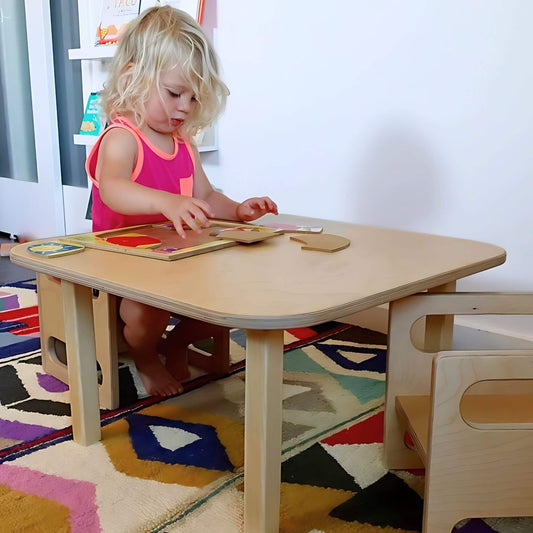
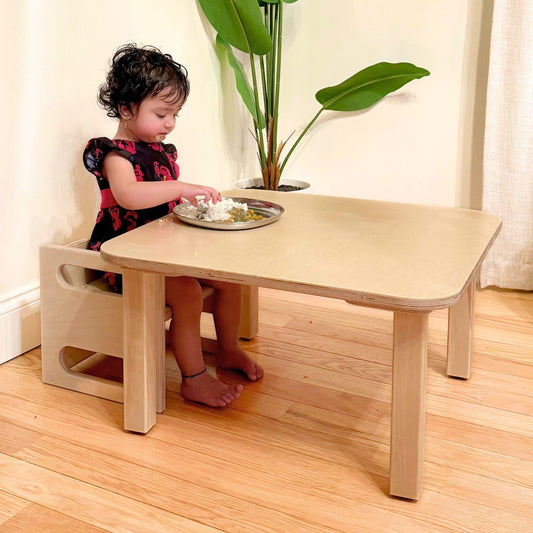
All those hands-on activities get even easier to repeat when your home is set up so your child can reach, choose, and reset materials on their own. The physical environment quietly teaches: a child-sized table and chair says, ‘This work is for you,’ while accessible shelving lets your child see options, take one activity at a time, and put it back without constant help. When materials are visible, reachable, and thoughtfully arranged, children are more likely to explore independently without constant prompting from adults.
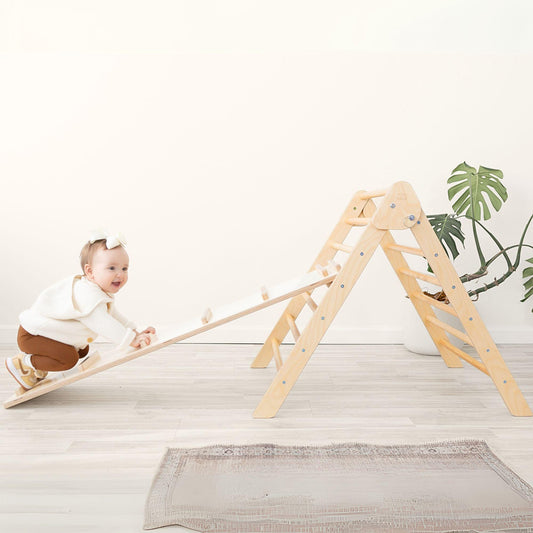
A simple learning corner can also include safe climbing structures that support movement and coordination as part of everyday learning.
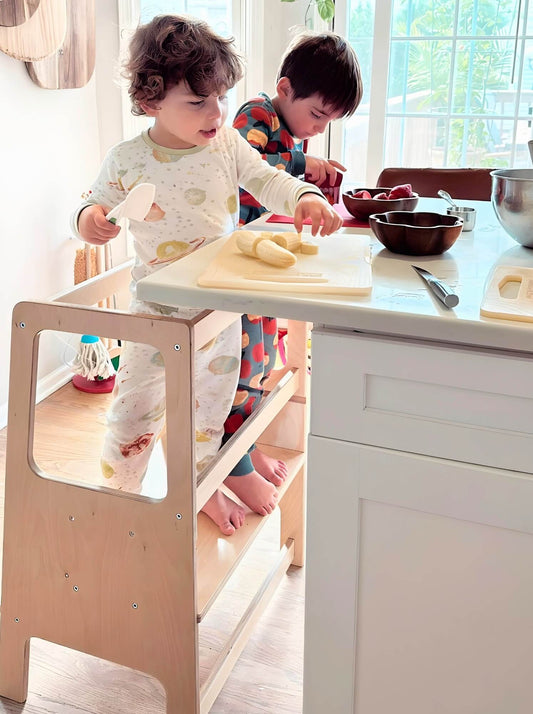
If you’re looking for Montessori-inspired pieces that fit a real family home, RAD Children’s Furniture is a helpful resource for handmade options like Pikler triangles, toddler towers for kitchen independence, tiered bookshelves that keep favorites visible, and sturdy child-sized tables and chairs.
Common Questions Parents Ask About Learning at Home
Q: What if my child refuses learning activities at home?
A: Start with connection, not correction. Offer two easy choices that feel doable, like “read one page or build one tower,” then stop while it’s still going well. Praise effort and participation, not results, so it feels safe to try again tomorrow.
Q: How can I help when progress feels painfully slow?
A: Shrink the task until your child can succeed in under five minutes, then repeat it often. Track tiny wins you can see, like “started without arguing” or “stuck with it for two minutes.” Consistency beats intensity, especially on hard weeks.
Q: How do I address mistakes without making my child feel ashamed?
A: Treat mistakes like information: “That didn’t work yet. What could we change?” Keep your voice neutral, model a quick reset, and share a time you had to practice something many times.
Q: Should I worry about screen time affecting learning motivation?
A: Many families are navigating this since 87% of children exceed recommended screen limits. Try a simple rhythm: screens after movement, food, and one short hands-on activity. Use a visual timer and keep devices out of sight when not in use.
Q: Can I support learning if I’m not a “teacher”?
A: Yes. Your job is to notice, encourage, and make space for practice, not deliver perfect lessons. Ask open questions, read together, and let everyday chores become learning through sorting, measuring, and problem-solving.
Build Child Confidence With One Simple Family Learning Activity
When schoolwork feels heavy or progress seems slow, it’s easy to wonder if learning at home is “enough” or if a child is falling behind. The steadier path is the mindset of motivating ongoing learning through positive parenting support, keeping things calm, curious, and consistent instead of chasing perfect days. Over time, those small, pressure-free moments add up to real child confidence building and long-term learning success. Small, steady learning beats big, stressful catch-up plans. Children may not remember every lesson, but they will remember feeling supported, capable, and curious. That kind of steady encouragement builds resilience and keeps your connection strong for the years ahead.





 Off
Off
