


Toddler (Kitchen) Tower: Solo vs Double, Safety and Counter Height Guide
Share
The Toddler Tower has become a favorite tool for caregivers who want to bring little ones into everyday routines in safe and meaningful ways. Sometimes called a learning tower, this child sized platform helps toddlers join activities at counter height, engage with simple kitchen tasks, and build independence in a supportive environment. If you are deciding between a solo toddler tower or a double version for siblings, or if you want clarity about height, placement, and safety, this guide brings together everything you need to know.
Before choosing any model, it helps to understand what developmental advantages a toddler tower can offer. Toddlers are naturally drawn to imitation and participation. They want to stir batter, rinse produce, or simply watch what happens when a grown up prepares food. By lifting a child to counter level inside a stable frame with protective sides, a learning tower makes this involvement possible without constant lifting or juggling. This creates a calmer kitchen routine for caregivers and an empowering learning space for children.
Solo vs Double Toddler Tower
When selecting the best toddler tower for your home, one of the earliest choices is whether you need a single child design or one that fits two children. Both styles support the same developmental goals, but each one fits different household rhythms.
A solo toddler tower works well for families with one young child or for homes where only one toddler needs access at a time. A single platform keeps the footprint modest, so it fits comfortably in smaller kitchens or tighter layouts. It is also ideal for focused one on one tasks such as pouring ingredients, washing hands, or completing simple practical life activities. Many caregivers prefer a single tower because it keeps the routine centered on one child at a time, which can make instruction and supervision easier.
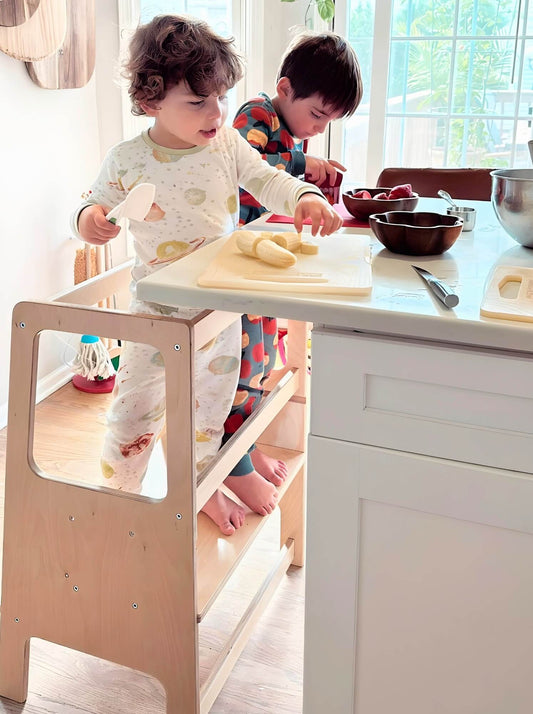
A double toddler tower, sometimes called a twin learning tower, is designed for siblings or friends who want to participate side by side. The wider platform supports two toddlers safely without crowding. This makes shared tasks smoother and supports cooperative play. Families often choose a double tower when they have twins, siblings close in age, or children who frequently request to be included in activities at the same time. A double model can reduce arguments over turns and help maintain a consistent kitchen workflow.
If you are deciding between the two, consider your available space, the number of toddlers in your home, and the type of daily routines you want to encourage. A solo tower keeps things simple and compact. A double tower creates a shared workspace that can support more collaborative involvement.
Safety Essentials for Any Learning Tower
Safety is the foundation of every well designed toddler tower. Although the structure supports independence, it also requires thoughtful use and supervision. Understanding key safety features and daily practices will help you create a secure environment for your child.
The most important design element in the best toddler tower is stability. A wide base and solid frame help prevent tipping during use. Protective sides or rails keep a child inside the structure without restricting movement with high-quality, sturdy construction and smooth, rounded edges. Height adjustable platforms are another helpful feature because they ensure that the tower fits your growing toddler comfortably, reducing the urge to climb or lean.
Daily safety habits matter just as much as the design. Place the tower firmly against the counter to reduce gaps where a child might reach or shift their weight. Encourage your toddler to climb in and out only through the intended opening. Some families make a simple rule that the tower is a place for standing rather than sitting, which keeps weight evenly distributed.
Supervision is essential. A toddler tower enables participation but does not replace an adult presence. Remaining close ensures your child stays within the safe boundaries of the activity and understands how to move their body confidently on the platform.
Finding the Right Counter Height
Matching a toddler tower to the correct counter height creates a comfortable space where your child can reach and work safely. Most standard kitchen counters measure around 36 inches high. Our toddler towers are designed with this in mind and come with adjustable platform levels. This lets you customize the height so your child can see and reach the work surface without stretching or leaning too far forward.
When testing the height, place the tower at the counter and have your toddler stand on the platform. Their elbows should rest slightly above the surface, similar to how you might stand at a workbench. If the surface is too high, your toddler might strain to participate. If it is too low, they may lean over the rail. Adjust the platform so that their upper body stays comfortably supported.
Some families also use a toddler tower at bathroom sinks or craft tables. In these settings, counter heights vary, so the adjustable feature becomes even more helpful. The goal is always the same. Provide safe access and support balanced posture to encourage longer, more engaged participation.
Activities That Support Learning and Independence
A learning tower turns ordinary tasks into rich developmental opportunities. In the kitchen, toddlers can rinse berries, mix ingredients, help knead dough, or scrub vegetables. These activities build fine motor skills and strengthen hand eye coordination. They also nurture early interest in food preparation and healthy eating habits.
Beyond cooking, a toddler tower supports practical life skills. Children can wash hands independently, help wipe counters, transfer objects from one bowl to another, or assist with simple cleaning routines. Many families also use their tower for sensory activities like water play, scooping grains, or stirring foam paints. Each task encourages decision making, focus, and autonomy.
With a double toddler tower, cooperative activities become especially valuable. Children can work together to sort items, pass ingredients, or help each other complete tasks. These shared experiences support social skills, turn taking, and collaborative problem solving.
Making the Most of Your Toddler Tower
A Toddler Tower invites connection, conversation, and shared experiences. By giving your child a dedicated place at the counter, you turn daily routines into moments of growth and joy. Whether you choose a solo or double design, the key benefits remain the same. Independence, confidence, and involvement begin to flourish as your toddler becomes an active participant in family life.
As you find the best toddler tower for your home, remember to focus on safety, comfort, and the style of interaction you want to encourage. With thoughtful use, a learning tower becomes more than a piece of furniture. It becomes a tool for building skills, nurturing curiosity, and strengthening your bond with your child.





 Off
Off
